MAGAZINE · NEWS & TRENDS
The history of iconic perfumes: from Chanel Nº 5 to Dior Sauvage
Eight fragrances, nearly a century of creation and very different ways of shaping culture. Discover their creators, historical context and lasting recognition.
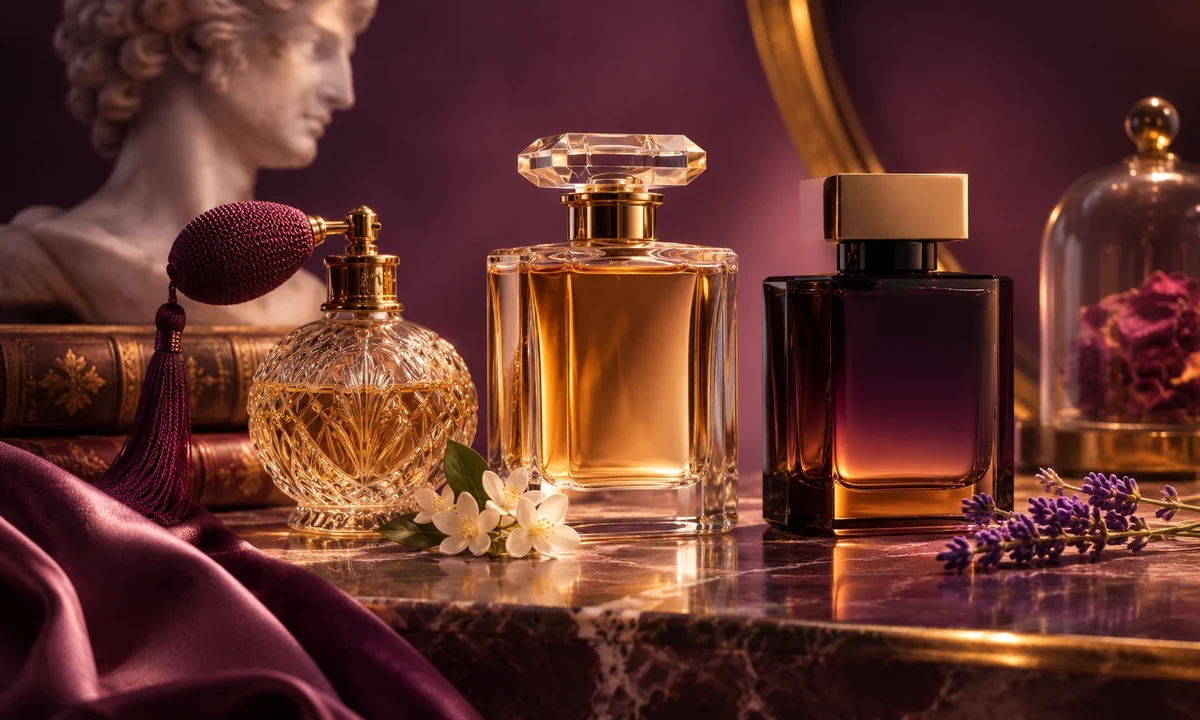
A perfume is more than a blend of aromatic materials. Its bottle, era, perfumer and brand storytelling can create a shared cultural memory. However, fragrance history deserves more than slogans: dates, authorship and sources should be checked, and cultural influence must be separated from commercial performance. This timeline brings together eight milestones selected for their historical relevance, not as a quality league table or current sales ranking.
What makes a perfume iconic?
Olfactory innovation: a perfume may introduce an aesthetic or popularise a new reading of familiar ingredients. Historical value often comes from composition and context rather than rarity alone.
Visual identity: bottle shape, colours, name and advertising can make a fragrance recognisable even to people who have never worn it. Packaging does not prove formula superiority.
Continuity: reformulations, flankers, new concentrations and continued distribution keep names alive. Today’s product is not necessarily identical to the original.
Collective memory: film, music, advertising and personal recollections all contribute to a fragrance’s aura. A repeated marketing anecdote is not always a documented historical fact.
Eight perfumes that helped shape fragrance history
1921 · Ernest Beaux
Chanel Nº 5
Created through the collaboration between Gabrielle Chanel and Ernest Beaux, Nº 5 used an expressive aldehydic character to build an abstract floral impression rather than imitate a single flower. The restrained bottle and memorable name became a widely recognised symbol. Marilyn Monroe later increased its cultural visibility. The documented launch should be distinguished from frequently retold anecdotes about the number five and early samples, whose evidential basis varies.
The name became a reference for fashion’s influence on fragrance. Nº 5 shows how a perfume can become part of collective memory beyond its original category. The historical context of 1921 is essential but is not a substitute for evaluating the current formula.
1925 · Jacques Guerlain
Guerlain Shalimar
Shalimar was framed by the romantic story of Shah Jahan and Mumtaz Mahal. Jacques Guerlain brought together bergamot, resins and prominent vanilla to shape a landmark amber fragrance. Its blue-topped bottle became part of its identity. The terminology also evolved: for decades the family was widely called “oriental”, while “amber” is increasingly preferred.
Shalimar shows how a narrative amplifies the sensory experience. Its balance of brightness and warmth remains discussed, but it should never be reduced to a single ingredient. The amber family covers highly diverse compositions.
1966 · Edmond Roudnitska
Dior Eau Sauvage
Long before Sauvage, Dior launched Eau Sauvage, a landmark in modern masculine fragrance. Edmond Roudnitska crafted a luminous, fresh and refined structure, showing that masculine elegance could be subtle rather than dense. Eau Sauvage (1966) must not be confused with Sauvage (2015): they are different creations from different eras.
This milestone matters when exploring twentieth-century masculine codes. A refined citrus structure does not automatically mean weakness or poor longevity: both depend on formulation. Historical influence is distinct from personal taste.
1988 · Pierre Bourdon
Davidoff Cool Water
Cool Water helped popularise an aromatic, fresh and aquatic vocabulary in the men’s market. Its sea-inspired imagery reflected a period when freshness became a prominent commercial theme. It is often cited as an influence on later releases, though not every aquatic fragrance derives from its formula.
Cool Water’s reputation connects advertising with olfactory language. Maritime imagery helps explain its cultural position, but no campaign can dictate how every person will perceive the fragrance. Fresh scents are not limited to summer.
1996 · Alberto Morillas
Giorgio Armani Acqua di Giò
Acqua di Giò evokes a Mediterranean world of sea breeze, citrus, transparency and relaxed elegance. Its cultural appeal is closely tied to everyday versatility. Later versions have their own formulations and names; the 1996 original refers to the Eau de Toilette, not Profondo, Parfum or other releases.
Acqua di Giò shows how landscapes can inspire olfactory ideas. Buyers should check the exact version: products sharing a familiar line name can have very different formulas.
2008 · Christophe Raynaud, Olivier Pescheux e Michel Girard
Paco Rabanne 1 Million
The gold-bar bottle is inseparable from 1 Million. Its provocative luxury imagery made the fragrance instantly recognisable. The warm, sweet and spicy signature reflected a shift in part of the men’s market. The brand later adopted the name Rabanne, but the original launch was under Paco Rabanne.
1 Million demonstrates the power of distinctive object design. The gold bar is central to recognition, yet memorable packaging and formula quality are independent considerations. Skin testing remains helpful.
2010 · Jacques Polge
Bleu de Chanel
Bleu de Chanel helped establish a versatile woody-aromatic style with minimalist design and a message of independence. The 2010 Eau de Toilette introduced a line later expanded with Eau de Parfum and Parfum. Each concentration should be assessed as its own interpretation rather than assumed to share an identical formula.
Bleu de Chanel’s development across concentrations shows how a house can extend an idea without repeating exactly the same product. This distinction matters when comparing reviews and note lists.
2015 · François Demachy
Dior Sauvage
Sauvage arrived at a time when recognisable signatures, projection and global campaigns mattered greatly. Its fresh, spicy aromatic character became widely familiar. The advertising had cultural impact and prompted debate. Claims about sales leadership require a source, time period, product category and geography; fame alone does not establish market share.
Sauvage’s widespread recognition makes it a useful case study in the interaction between product, advertising and consumer culture. Recognition alone does not prove leadership in a given annual sales ranking.
Three changes these classics help explain
From abstract florals to modern freshness
Chanel Nº 5 matters for its abstract floral construction, not merely for containing floral notes. Later, Eau Sauvage and Cool Water presented different kinds of masculine freshness: refined citrus structure and an aromatic-aquatic vocabulary familiar to new audiences. These changes reflect evolving conventions rather than a straight line of progress towards objectively better perfume.
The bottle as a cultural symbol
Shalimar’s blue cap extends its romantic story; 1 Million’s gold bar makes the package instantly memorable; Bleu de Chanel uses restraint and darkness. These visual languages are recognisable even without smelling a fragrance. Yet packaging and skin performance remain separate considerations.
One famous name, several distinct formulas
Modern fragrance lines often feature Eau de Toilette, Eau de Parfum, Parfum and multiple reinterpretations. Older reviews should therefore be read with care: check the exact concentration and date, and avoid assuming that formulas with the same family name are identical.
Reading brand histories critically
Fragrance houses maintain useful archives for launches and creative histories, but their narratives also serve commercial purposes. Whenever possible, institutional accounts can be compared with museum documentation and independent specialist publications. Inspiration stories and slogans should be identified as brand narratives rather than scientific findings.
Sales claims require equally careful reading. A brand may report a leading product in a specific country, channel or timeframe. Without a consistent scope and methodology, such claims cannot establish a global all-time ranking. These eight fragrances were selected to illustrate historical changes, not to suggest they were the eight best-selling perfumes ever.
Are the classics always the best fragrances?
There is no universal answer. A classic may be essential for understanding a trend yet unsuitable for someone seeking an everyday scent. A modern release may better suit an individual’s skin, routine or preferences. Some fragrances became famous for innovation; others also benefited from global distribution, advertising investment and brand recognition. Formula quality and commercial success are different questions.
Are they still the bestsellers?
It would be misleading to call every perfume here a current sales champion without comparable evidence. Rankings may refer to a market, retailer, concentration, geography or limited time period. A brand claim is not the same as an independently audited global ranking. This guide therefore focuses on historical significance rather than unsupported sales statistics.
How advertising turned fragrances into culture
Chanel Nº 5 connects recognisable packaging with an enduring cultural symbol. Shalimar illustrates the power of a romantic origin story. Eau Sauvage and Cool Water helped communicate changing masculine codes, while 1 Million made its gold-bar bottle central to the message. Bleu de Chanel and Sauvage demonstrate the scale of contemporary global campaigns. Understanding perfume culture requires separating the perfumer’s creation, the brand narrative and the memories that audiences develop.
Choosing between a classic and a modern release
Start with scent preferences, not the prestige of a name. Sample the actual concentration you intend to buy, watch how it develops and consider occasion, intensity and price per millilitre. Treat the note pyramid as descriptive language, not a performance guarantee. If your aim is historical discovery, a sample may suffice; if you want a daily fragrance, personal preference should prevail over fame.
Frequently asked questions
Are Eau Sauvage and Sauvage the same fragrance?
No. Eau Sauvage launched in 1966, while Sauvage arrived in 2015 with a different olfactory identity.
Does an old fragrance always retain its original formula?
Not necessarily. Ingredients, regulations and production choices can change over time.
Why did Chanel Nº 5 become so famous?
Its composition, name, visual identity and cultural presence all contributed to its recognition.
Is a bestseller necessarily the best perfume?
No. Sales, recognition, perceived quality and individual preference describe different things.
Explore further
Sources and editorial notes
- Chanel — House history
- Guerlain — House history
- LVMH — 100 years of Shalimar
- Galerie Dior — house history
{html.escape(d["note"])}
{html.escape(d["footer"])}