BUYING GUIDES · HOW TO WEAR
How to make perfume last longer: 7 useful fragrance tips
Fragrance longevity does not depend on one magic trick. Formula, skin type, environment and application habits all affect how scent develops. This guide brings together seven practical approaches, separating useful advice from claims that lack robust evidence.
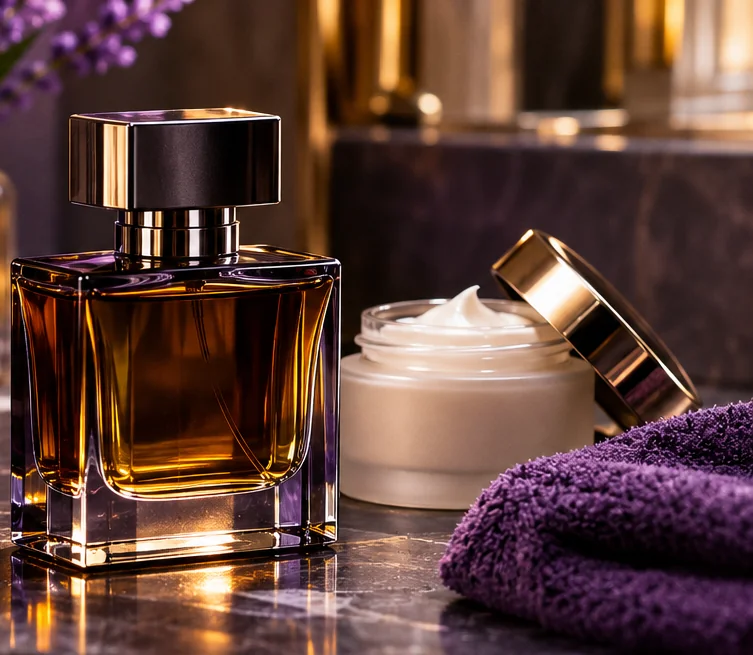
1. Moisturise your skin before applying fragrance
Dry skin can make a fragrance seem to fade faster. Apply an unscented moisturiser a few minutes before spraying, allowing it to absorb. The Perfume Society explains that moisturised skin can help fragrance linger.
You do not need scented lotions or an oily layer over your perfume. If your skin is sensitive, use a product you already tolerate and patch-test where appropriate. Moisturising can help, but it cannot turn a light fragrance into an all-day powerhouse.
2. Choose application points with restraint
Neck, upper chest and wrists are practical places to apply fragrance. Warm pulse points may help scent radiate, but there is no magic spot that guarantees extra hours.
Start modestly, assess strength and follow the maker’s directions. In offices, public transport or around fragrance-sensitive people, restraint matters. Avoid irritated skin, eyes and cuts.
3. Do not rub your wrists together
Let your fragrance air-dry after spraying. Rubbing your wrists together does not improve longevity; friction can change how you perceive the more volatile opening notes.
Avoid exaggerated claims: a quick rub has not been shown to “destroy perfume molecules” or eliminate all longevity. The practical advice is simply to spray, allow it to settle and observe its development.
4. Compare formulas, not just EDT and EDP
Eau de Toilette, Eau de Parfum and Parfum often signal differences in concentration, yet there is no universal scale predicting how many hours every fragrance will last. Two versions with the same name can have very different compositions and performance.
Base accords such as woods, resins and amber can sometimes last longer than sparkling citrus notes. The formula and your skin still matter. Use the NOTAS DE HOMEM fragrance library to compare specific versions rather than assuming the label tells the whole story.
5. Layer deliberately, not indiscriminately
Layering means building a compatible base: for example, unscented moisturiser followed by your fragrance, or a matching body lotion. It may improve perceived staying power without changing the intended scent profile.
Mixing several fragrances does not guarantee longer wear. It can distort the balance of notes and become overwhelming. Start with one supporting product and your usual fragrance, both in restrained amounts.
6. Only spray clothing when the fabric allows it
Some fabrics can retain scent longer than skin, but alcohol, dyes and other formula ingredients can stain. Test an inconspicuous area first and follow the garment’s care label.
Avoid silk, leather, suede, delicate materials and valuable garments. Do not compensate for weak skin longevity by repeatedly spraying clothing. Scent may remain, but projection and development will differ.
7. Store bottles away from heat and light
Correct storage does not increase the intrinsic longevity of a new perfume; it helps preserve its character over time. Repeated heat and sunlight exposure can alter a fragrance, especially its more delicate accords.
A cool, dry, dark drawer or cupboard is preferable. Bathrooms experience frequent heat and humidity changes, making them a less suitable storage location. Keep the cap on and never leave a bottle in a hot car.
A simple wear test to try yourself
Pick one fragrance and avoid testing several perfumes at the same time. On two days with similar routines, spray the same amount on the same area: on one day, clean dry skin; on the other, after unscented moisturiser has absorbed. Ask someone else to assess it discreetly after two, four, six and eight hours.
Record temperature, activity and perceived intensity on a 0–5 scale. This is not a scientific trial: scent adaptation and subjective perception vary. The purpose is to see whether a technique makes a difference for you, without inventing universal longevity figures.
| Time | Without lotion | With lotion |
|---|---|---|
| 2 h | ___ / 5 | ___ / 5 |
| 4 h | ___ / 5 | ___ / 5 |
| 6 h | ___ / 5 | ___ / 5 |
| 8 h | ___ / 5 | ___ / 5 |
What people often mistake for longevity
Longevity is how long a scent can be detected; projection is how far it travels. A perfume can remain close to your skin after it stops projecting noticeably.
Olfactory adaptation can make familiar scents fade from your awareness. Do not take this alone as a reason to overspray: ask someone else or take a break from the scent.
Frequently asked questions
Does Eau de Parfum always outlast Eau de Toilette?
No. Concentration matters, but composition, fragrance family and wearing conditions also shape the result. Compare actual versions.
Does petroleum jelly guarantee all-day wear?
There is no universal guarantee. Unscented moisturiser is a straightforward option; highly occlusive products may not suit every skin type.
Can I spray regular perfume on my hair?
Alcohol-based fragrances may dry some hair types or irritate the scalp. If needed, choose a product specifically formulated for hair and follow its instructions.
Explore next
Sources and transparency
- The Perfume Society — FAQ
- Estée Lauder — Fragrance longevity
- Ulta Beauty — How to make fragrance last longer
Editorial guide based on public sources. No instrumental tests or independent wear trials were performed to establish specific hours of longevity. Results vary by formula and wearer.